

We collaborate across borders to strengthen the Baltic Sea region’s sustainability and competitiveness.
Together, we work for sustainable development, local vitality, and the archipelago of the future.
Cross-border cooperation
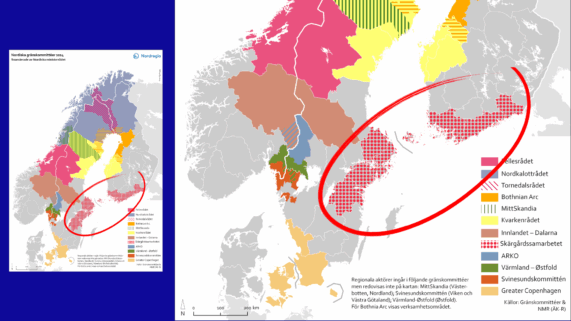
The Nordic Archipelago Cooperation (NSS) is a cross-border collaboration between authorities and regions in the archipelago areas of Sweden and Finland, including Åland.
INCLUDES:
Sweden: Stockholm, Uppsala, Södermanland, and Östergötland counties
Finland: Southwest Finland, Uusimaa, and Kymenlaakso
Autonomous region of Åland
Common challenges – in a shared region
We operate in a shared geographical and geopolitical area, where cross-border cooperation is essential.
NSS focuses on five key areas:
- Organizational form
- Anchoring and visibility
- Green transition
- Civil preparedness
- Nordic cooperation
Together, we face common challenges such as climate change, security, and sustainable development.
Through all of this, NSS contributes to realizing the vision of the Nordic Council of Ministers:
“The world’s most sustainable and integrated region by 2030”
Towards a new organizational form – EGTC
Since 2025, the Nordic Archipelago Cooperation has been working to transform the organisation into a European Grouping of Territorial Cooperation (EGTC) under the name Nordic Archipelago and Coastal Alliance (NOAC). The aim is to establish a long-term and stable organisational structure that strengthens cross-border cooperation between Nordic archipelago and coastal regions and enhances the capacity to develop joint initiatives and international projects.
Throughout 2025 and 2026, extensive preparatory work has been carried out to assess the legal, administrative and organisational requirements for establishing the new organisation, in close cooperation with the member regions.
At the Council Meeting in 2026, the continued formation of NOAC was discussed. In accordance with the recommendation of the Board, the Council decided to mandate the Board to proceed with further measures towards the establishment of a European Grouping of Territorial Cooperation, based on the premise that Åland will serve as the headquarters of the Nordic Archipelago and Coastal Alliance (NOAC).
The work now continues with the next stages of the establishment process, including the preparation of statutes, the development of the organisational structure, and the national approval procedures required for NOAC to be formally established and commence its activities.
Regions4Climate – collaboration for climate adaptation
News & Updates
Upcoming events
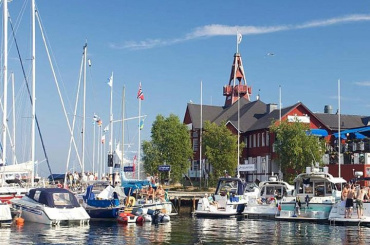
Besöksnäringens potential i skärgårdarna
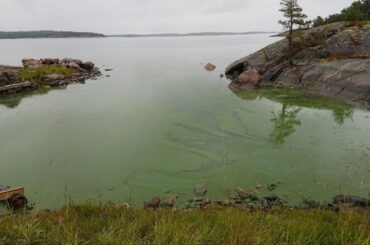
Östersjöns interna fosforbelastning